Inside This Blueprint
Table of Contents
- A Note From the Founder04
- Why Wrinkles Actually Form05
- Why Skin Changes After 4006
- The Landscape of Solutions07
- Sunscreen: Still Non-Negotiable08
- Hydration & Barrier Repair09
- Your Morning Routine10
- Your Night Routine11
- The Order Matters12
- Beyond the Bottle13
- 5 Ways to Sabotage Your Results14
- What to Actually Expect15
- Genetics: The Elephant in the Room16
- Troubleshooting17
- Layering With Other Products18
- FAQ19
- The Real Secret20
- You've Got This21
02

Welcome
You're In
First, thank you. There are a lot of serums you could've picked, and you picked this one.
This isn't a pitch — you already bought the thing. What you're holding now is the actual manual: the stuff that makes the difference between "used it a few times and moved on" and "actually saw a real difference in the mirror."
Quick preview of what's inside: how wrinkles actually form, why your skin's needs shift the way they do once you hit your 40s and beyond, what your other options look like so you're not left wondering if you picked wrong, the exact routine to use this in, and a handful of things that matter more than people give them credit for — sleep, water, stress, the boring stuff that actually works.
No fluff. Let's get into it.
03
A Note From the Founder
Why This Exists

"
I started Revivalix because I got tired of watching people get sold hope in a bottle, over and over, at $60-200 a pop, with nothing to show for it except a drawer full of half-used serums and a healthy distrust of the entire skincare industry.
That distrust is earned. Most of the industry runs on vague claims, trendy ingredients nobody actually explains, and marketing budgets bigger than the R&D behind them. It's not that people are gullible for falling for it — it's that almost nobody in this space tells you the truth about what's actually happening to your skin and why.
So we built something different: a formula where two ingredients are doing two different, necessary jobs — not because it sounded good in a meeting, but because that's what the skin underneath your face and the skin on top of it both genuinely need.
And then we wrote this blueprint, because buying the right product is only half of it. Using it correctly, understanding what's actually going on, and knowing what else matters — sleep, sun, stress, all of it — is the other half. I didn't want you to have one without the other.
Thank you for trusting us with this. I hope this blueprint earns it.
— Revivalix Founder
04
Part One
Why Wrinkles Actually Form
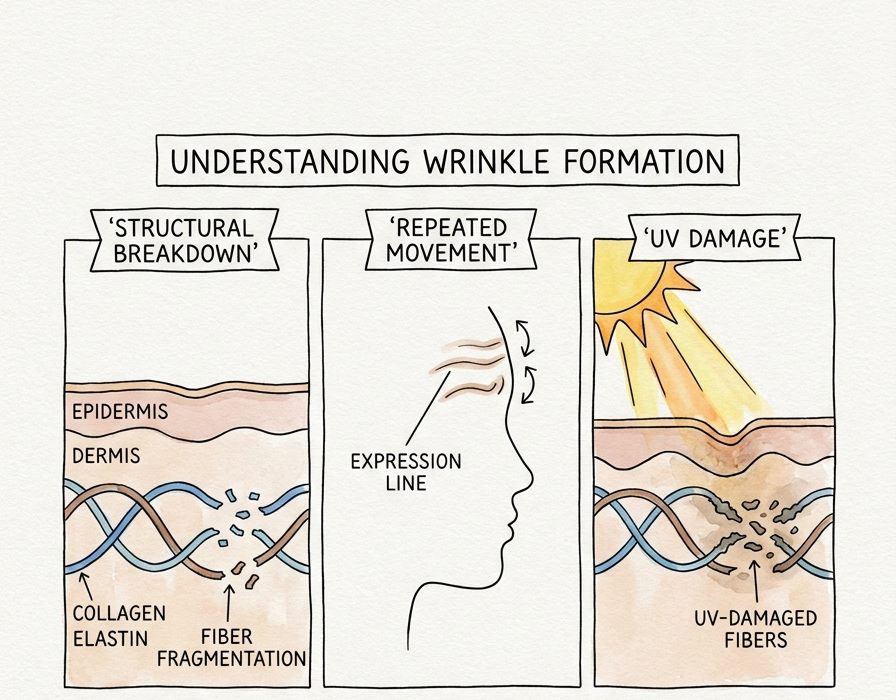
Let's start with the basics, since almost nobody explains this part clearly. Wrinkles aren't random — they're the visible result of three separate things, all accelerating as you age:
Structural breakdown
Collagen and elastin — the proteins that keep skin firm and bouncy — break down faster than your body replaces them. This is what causes sagging, deeper lines, and the loss of that "bounce back" quality.
Repeated movement
Every squint, frown, or raised eyebrow folds the same patch of skin in the same place. Do that thousands of times over years, and the fold becomes permanent — exactly why expression lines show up right where you'd expect.
Environmental damage
UV exposure is the single biggest accelerant of both of the above. It breaks down collagen directly and speeds up visible aging faster than time alone would.
Three causes. All addressable to different degrees. Let's go through what actually helps with each.
05
Part Two
Why Skin Changes After 40
Everything in the last chapter happens to everyone, at every age. But if you're in your 40s, 50s, or beyond, there's an extra layer worth naming directly instead of dancing around it: hormones.
Estrogen decline
Estrogen helps maintain collagen and skin thickness. As it drops through perimenopause and menopause, collagen loss speeds up — which is why skin can feel like it's changing faster in this decade than in the last two combined.
Thinner, more delicate skin
Less collagen means less cushioning. Skin bruises easier, feels more fragile, and reacts faster to harsh products — which is exactly why gentler actives matter more here, not less.
Slower cell turnover
Your skin's natural renewal cycle stretches out with age. Dead cells linger longer, texture looks duller, and any topical results simply take more time to surface. This isn't your routine failing — it's just the new timeline.
This is exactly why your serum pairs a peptide with bakuchiol instead of a harsh retinol alone — mature skin needs ingredients that rebuild without punishing an already-thinner barrier.
None of this is meant to be discouraging. It's the opposite: once you know what's actually changing under the surface, the rest of this blueprint makes a lot more sense.
06
Part Three
The Landscape of Solutions
You already made your choice, so this isn't a sales pitch — just useful context so ingredient names stop being a mystery.
Retinol / Retinoids
The most-studied anti-aging ingredient there is. Speeds up cell turnover, can stimulate some collagen production. Downside: irritation is common, especially early on — and especially on skin that's already thinner and more reactive, which is where a lot of mature skin lands.
Vitamin C
A genuinely good antioxidant and brightening ingredient. Doesn't do much for structural firmness on its own, and it's notoriously unstable — a lot of vitamin C serums oxidize before you finish the bottle.
Peptides (like the GHK-Cu in your serum)
Signal skin to rebuild collagen and elastin — generally well-tolerated, slower and steadier than retinol.
Bakuchiol (also in your serum)
A retinol-alternative — same cell-turnover goal, gentler delivery.
Hyaluronic acid
Hydration, not structure. Plumps temporarily, doesn't rebuild anything on its own.
In-office procedures
Microneedling, lasers, injectables. More intense and more expensive — stronger results for some concerns, but rarely anyone's step one.
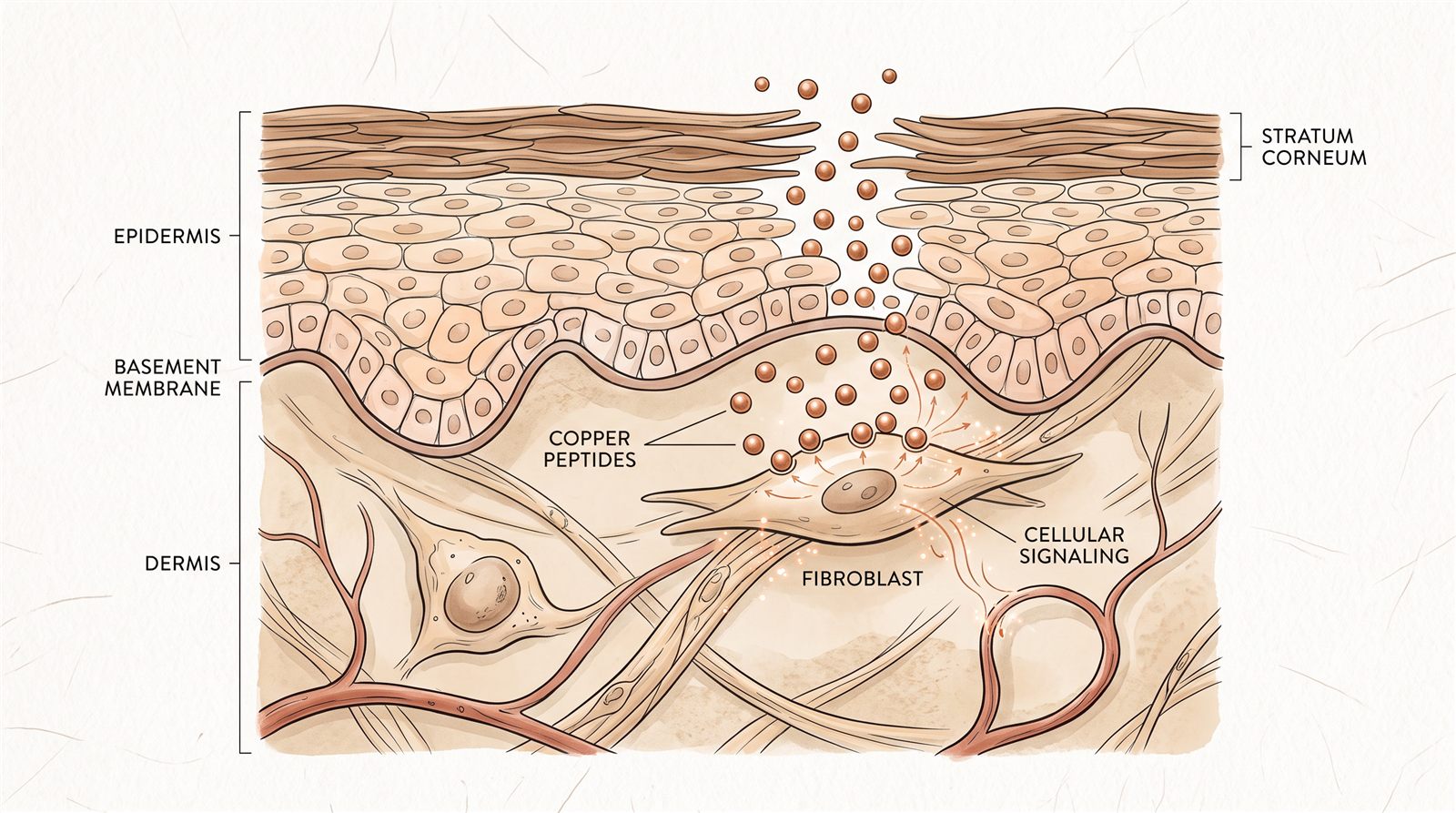
None of these are "enemies" of what you're using now — most layer together fine (more on that later). This chapter is just so you understand the landscape instead of hearing ingredient names thrown around with no idea what they do.
07
Part Four
Sunscreen: Still Non-Negotiable

Quick chapter, because it deserves its own page even though you've heard it a thousand times.
UV exposure is the single largest driver of visible aging that's actually within your control. It breaks down the same collagen your serum is trying to rebuild — skipping sunscreen is a bit like mopping a floor with the tap still running.
The practical version
SPF 30 or higher, every morning, rain or shine, indoors-all-day or not. UV goes through windows. It goes through clouds. It doesn't check your schedule.
You already knew this. Consider this your permission to actually do it, guilt-free about the past — nobody's grading you on years you can't get back, only on tomorrow morning.
08
Part Five
Hydration & Barrier Repair
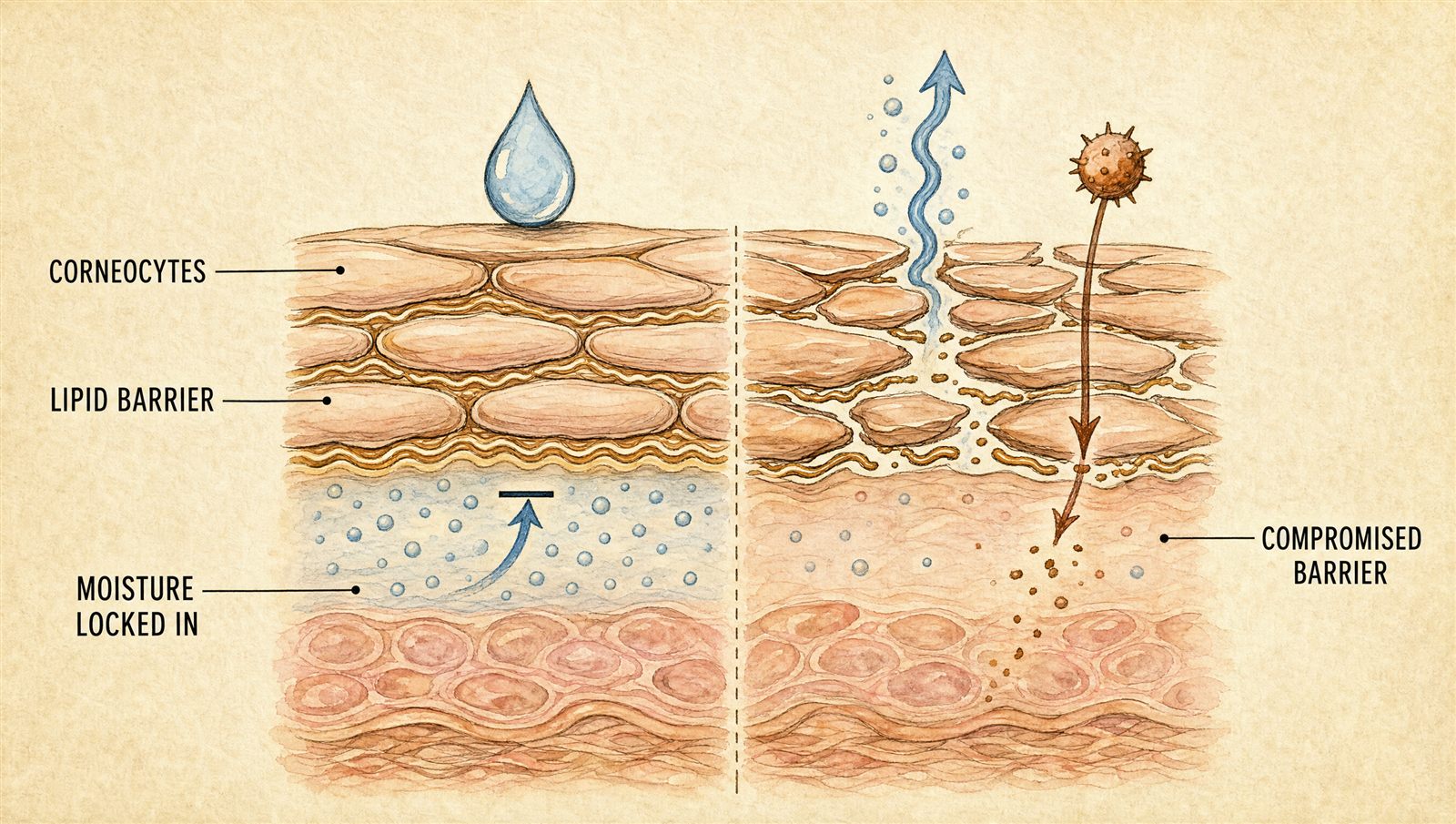
Your skin barrier is the thin outer layer that keeps moisture in and irritants out. When it's compromised — over-exfoliating, harsh products, plain dryness — everything else gets harder. Actives sting more. Skin looks duller. Nothing seems to "take."
Hydration
Hyaluronic acid and glycerin both pull and hold water in skin — why they show up in so many formulas, including yours. Plump skin also makes fine lines look less pronounced immediately.
Barrier support
Ceramides, niacinamide, and squalane help keep that outer layer intact. Not glamorous, but it's the foundation everything else in your routine depends on.
If your skin ever feels tight, reactive, or "off," barrier support is usually the first place to look — not more actives, less friction.
09
Part Six
Your Morning Routine
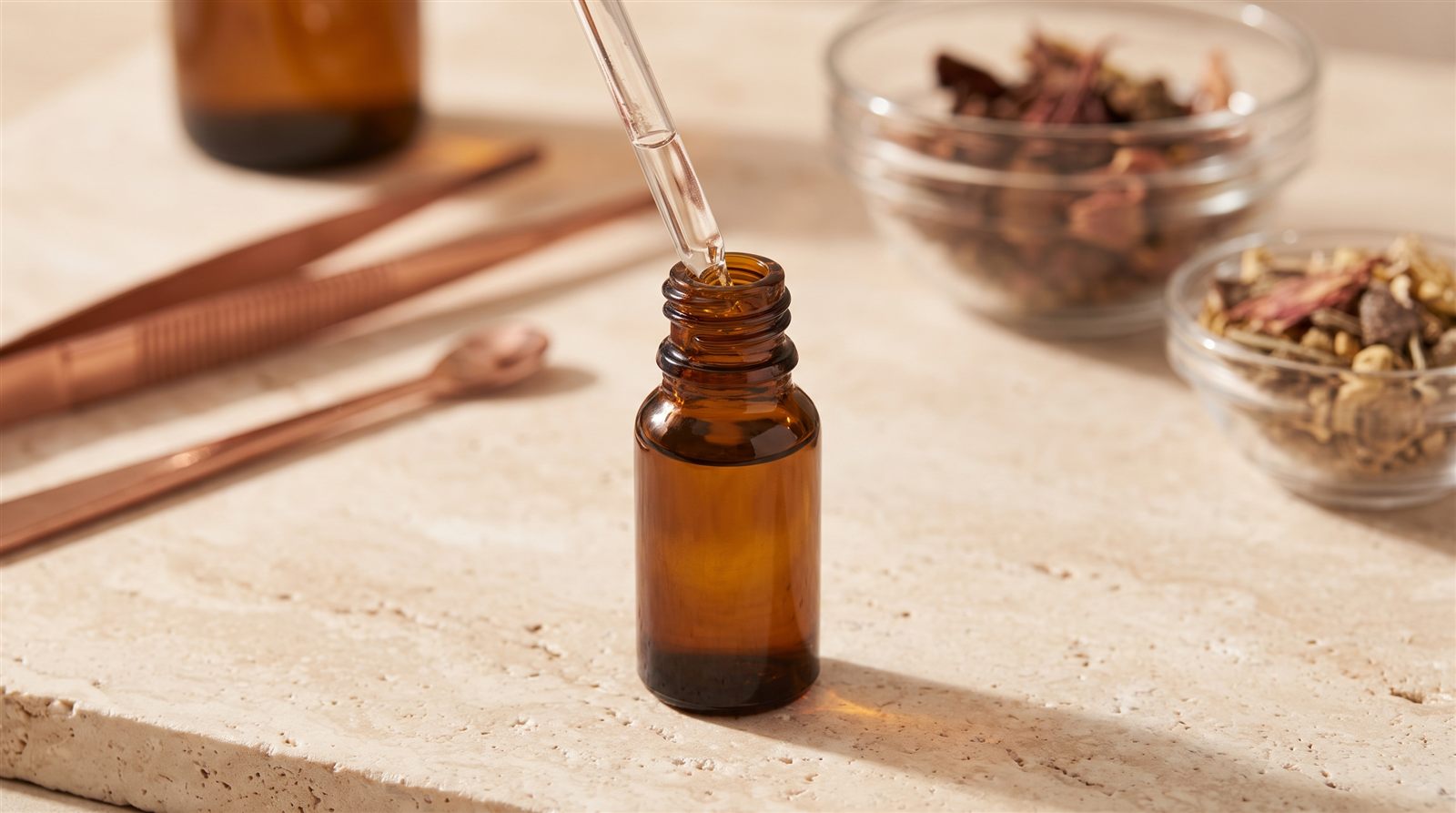
The minimal version (2 minutes)
1
CleanseGentle cleanser, lukewarm water. Not a production.
2
SerumA few drops on clean, dry skin. A little goes a long way.
3
MoisturizeSeals the serum's hyaluronic acid and glycerin in instead of letting them pull moisture out of your skin in dry air. Worth keeping, especially with a thinner, more moisture-sensitive barrier.
4
SPFNon-negotiable — protects the collagen you're rebuilding.
Four steps. Two minutes. This is the whole job. Everything below is for the mornings you have extra time, not because this isn't enough on its own.
Advanced: when you have the time
Mature skin tends to respond well to a few extra tools, not extra products. If you want to go further, here's where it's usually worth adding to, not swapping out.
1
CleanseSame as above.
2
Red light or LED, 5-10 minutesOn clean, bare skin, before anything else goes on. Red and near-infrared light stimulating fibroblasts to produce more collagen is a genuinely studied mechanism, not a wellness trend. Dermatologists have used versions of this in-office for years before at-home devices existed. Follow your specific device's timing, since they vary.
3
Serum, plus gua sha or a roller if you use oneWhile the serum is still a little tacky, it gives a gua sha tool or jade roller the slip it needs, so you're using the same product differently, not adding another one, for some lymphatic drainage and de-puffing on the side.
4
Moisturize
5
SPF
None of this is required for the serum to do its job. It's what you reach for on the mornings you have an extra five minutes, nothing more.
10
Part Seven
Your Night Routine

Your skin does most of its actual repair work while you sleep — the best kind of productivity, the kind that happens without you doing anything.
The minimal version
1
CleanseGet the day off your face.
2
SerumSame few drops, clean dry skin.
3
MoisturizeSeal it in for overnight repair.
That's the whole routine. No extra steps needed. This alone already covers both mechanisms your serum is built around — you don't need to gild the lily.
Advanced: when you have the time
1
Double cleanseAn oil-based cleanser first if you wore makeup or sunscreen, then your regular gentle one. Standard evening practice, not specific to this routine.
2
Red light or LED, 5-10 minutesIf you didn't already do this in the morning. Most people pick one time of day, not both, and evening works just as well as a wind-down step.
3
Serum, plus gua sha or facial massage if you use oneSame idea as the morning: the serum doubles as slip for the tool, no extra product needed.
4
Moisturize
Add to this on your own schedule. The minimal version above is the one doing the actual work.
11
Part Eight
The Order Matters
One thing worth knowing: apply serum before moisturizer, not after.
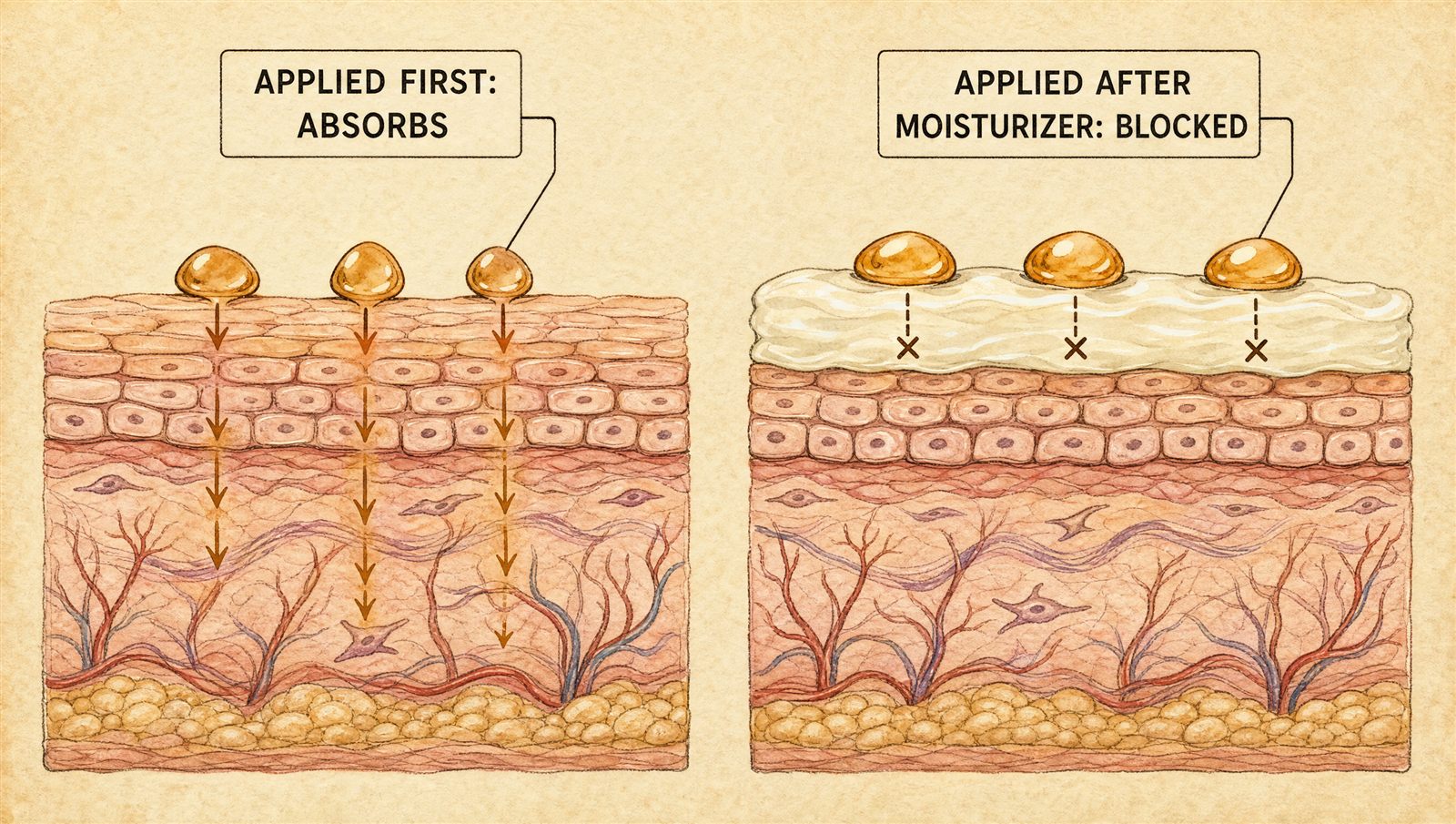
Active ingredients need direct contact with skin to actually do anything. Moisturize first and you've built a tiny wall between your serum and the skin that needs it. Simple fix, easy to forget.
12
Part Nine
Beyond the Bottle
No serum, no matter how good, works in a vacuum. What's on your plate and in your glass shows up on your face just as directly as what's in the bottle, so here's the actual mechanism behind each one, not just the "eat clean" advice you've heard a hundred times.
Sleep
7-9 hours, consistently. This is the actual repair window, not wellness advice.
Water
Hydrated skin looks and behaves better. Roughly 8 cups a day, adjusted for you.
Stress
Chronic stress keeps cortisol elevated, which works directly against collagen.
Diet
Less refined sugar, more protein, vegetables, and healthy fats. Details below.
The two habits that quietly undo the most work
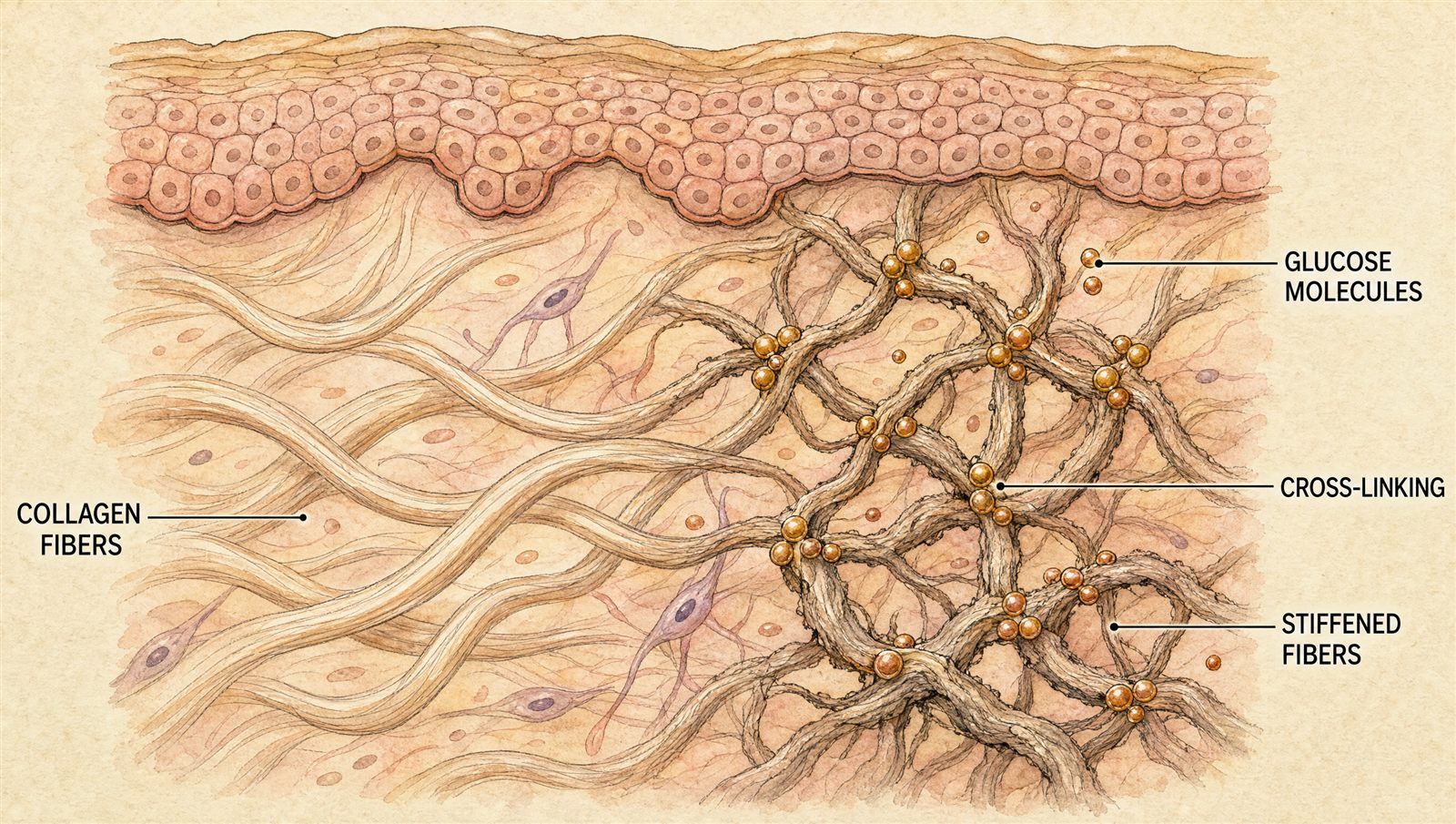
Sugar and glycation
Every time blood sugar spikes, some of it binds directly to your collagen and elastin fibers in a process called glycation. The result is a stiff, cross-linked protein your body can't repair or reverse, and it's a magnet for further damage, including UV damage. This is a real, separate aging pathway from sun exposure or hormones, and it's a big part of why a diet heavy in refined sugar and processed carbs shows up as less bounce and duller texture years before it shows up anywhere else. You don't need zero sugar. Cutting the obvious sources (soda, pastries, candy) and leaning on lower-glycemic carbs like whole grains, legumes, and vegetables meaningfully slows this down.
Alcohol, and it's not just dehydration
Alcohol pulls water out of your skin, but that's the smaller part of the story. It dilates blood vessels, which is why a night of drinking shows up the next morning as redness and puffiness, more so if you're prone to rosacea. It disrupts deep sleep even when it makes you fall asleep faster, cutting into the exact window your skin uses to repair itself. And it keeps your liver busy processing alcohol instead of clearing toxins and supporting your skin's antioxidant defenses. None of this means never drinking. It means treating a heavy night like the recovery event it is: extra water, extra sleep where you can get it, and not skipping your routine the next morning just because you feel rough.
Sleep and stress deserve the same specificity. Growth hormone, the signal that drives collagen synthesis, releases in pulses during deep sleep, mostly in the first half of the night, so cutting sleep short cuts directly into your repair window. Cortisol does the opposite of what you want on both ends: it activates enzymes called MMPs that break down existing collagen, and it slows new collagen production at the same time. A stressful season aging you faster isn't in your head. It's measurable, and unlike genetics, it's one of the more controllable levers here.
Facial expressions
Worth repeating: repeated squinting and frowning adds up over years into the exact lines this blueprint is about. Awareness helps more than people expect.
None of this replaces your routine. It just decides whether your routine is working with you or fighting an uphill battle against you.
13
Part Ten
5 Ways to Sabotage Your Results
Skipping SPF
Collagen rebuilds slower than sun destroys it.
Product-hopping
Switching serums every 3 weeks means nothing ever finishes the job.
Over-exfoliating
Stacking acids on top of this can wreck your barrier and cancel out the work.
Using way too much
A few drops is the dose, not a small pond.
Quitting at week 3
Most people stop right before the good part starts.
14
Part Eleven
What to Actually Expect

I'm not going to tell you this changes your life in 7 days. At this point, nobody believes that claim anyway.
Weeks 1-2 — skin starts feeling smoother and more hydrated.
Weeks 4-8 — early visible changes usually start showing up.
Months 3-6 — the real structural stuff becomes most visible.
What we can say: use this consistently, without giving up early, and you give your skin a real, fair shot. That's not a guarantee — it's just what happens when you actually stick with a process.
15
Part Twelve
Genetics: The Elephant in the Room

Real talk for a second.
Genetics play a massive role here. That's why your friend who "does nothing" somehow still looks amazing, and you're doing everything right and still working for it. Deeply unfair. Also just true.
Your own hormone timeline plays a role too — when perimenopause hits, how steep the drop is, all of it varies person to person the same way genetics do. Two women the same age can be on completely different clocks.
We're not going to blame genetics or hormones, because both parts are completely out of your control. Spending energy being mad about it doesn't rebuild a single strand of collagen.
So we're going to work with what we've got. Not what your friend's got. What you've got. That's the only version of this that's actually useful.
16
Part Thirteen
Troubleshooting
"My skin feels tight after applying."
Apply to slightly damp skin, not bone-dry, and follow immediately with moisturizer.
"Is this purging or a reaction?"
Purging is short (1-2 weeks) and shows up where you normally break out. A reaction is redness/burning/itching that doesn't calm down — stop use and patch test before trying again.
"Can I use this with retinol?"
Yes, but don't stack them in the same application — alternate AM/PM or alternate nights.
Always patch test first, especially if your skin has been through it lately.
17
Part Fourteen
Layering With Other Products
Quick cheat sheet, because "can I mix X with Y" questions eat up more brain space than they should.
Plays well with
Hyaluronic acid, niacinamide, ceramides, ordinary moisturizers and sunscreens.
The old myth you can ignore
Copper peptides and vitamin C don't actually "cancel each other out" — that guidance is outdated. Just don't layer them in the exact same application.
Use with more care
Strong acids (AHA/BHA) and retinol. Alternate days or AM/PM instead of piling everything on at once.
Fewer actives applied consistently beats more actives applied chaotically. Every time.
18
Part Fifteen
FAQ
How long until I see something?
Surface changes in 1-2 weeks; structural changes in 3-6 months.
My skin is sensitive — is this too much?
Formulated with soothing, barrier-supporting ingredients in mind — patch test first, always.
I'm in perimenopause or menopause — does this still work for me?
Yes, and this is genuinely where a gentler peptide + bakuchiol combo has an edge over harsh retinol — it works with skin that's already thinner and more reactive instead of fighting it.
Pregnant or breastfeeding?
Please check with your doctor first. We won't guess for you on something this important.
Can men use this?
The skin doesn't check ID. Same causes, same routine.
Do I need anything else?
No — this covers the essentials on its own.
19
Part Sixteen
The Real Secret

Here's something nobody tells you about working toward anything: the actual doing of it feels good. Not just the result — the process.
Think about a farmer looking out at a field he planted months ago, now fully grown. That feeling isn't really about the crop. It's about knowing he showed up, day after unremarkable day, and it turned into something.
This is for you. Not for anyone else, not for validation. Though — sure — it's nice if you end up looking better than before. No shame in that either.
The farmer doesn't control the weather. You don't control your genetics. What you both control is whether you show up tomorrow.
20
Before You Go
You've Got This

I hope this was actually valuable — not just "free stuff that fills space," but genuinely useful.
You already made the decision that matters most: you started. The rest is just consistency, the stuff in this blueprint, and giving it the time it actually needs.
Thank you for trusting us. Here's to seeing it through.
Questions along the way? Reach out anytime at support@revivalix.com. We actually read these.
21
1 / 20
100%
Swipe left or right to turn the page